
High-Performance Primary Crushing for Laboratory Sample Preparation
The Alsto JC2513 Mk2 Jaw Crusher is a heavy-duty, high-performance primary crusher engineered for the rapid reduction of 110 mm lump ore to approximately 2 mm in a single crushing stage. Designed for high-throughput laboratories, it delivers exceptional reduction ratios, consistent product sizing, and reliable performance for demanding sample preparation applications.
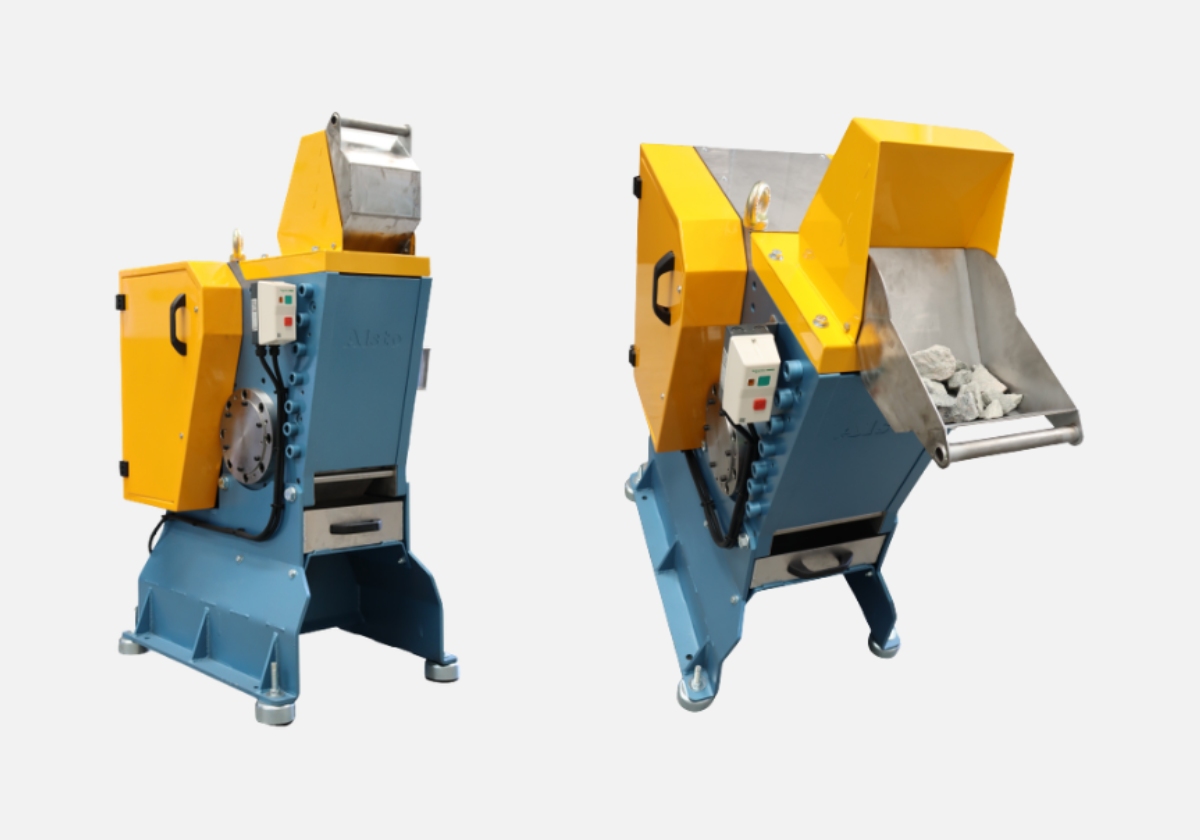
Capable of crushing approximately 85% of the sample to less than 2 mm in a single pass, the JC2513 Mk2 is one of the fastest fine jaw crushers available for laboratory use.
Key Benefits
- Rapid single-stage crushing improves laboratory throughput.
- Minimises sample handling and reduces contamination risk.
- Produces consistent particle sizes for accurate downstream analysis.
- Handles large drill core and lump ore samples with ease.
- Adjustable jaw gap provides precise control of product size.
- Heavy-duty construction ensures long service life.
- Easy maintenance reduces downtime and operating costs.
- Dust extraction capability improves laboratory cleanliness and operator safety.
- Low operating noise creates a safer laboratory environment.
Key Features
- Processes lump samples up to 110 mm.
- Large 130 × 250 mm jaw inlet.
- Single-stage crushing reduces the need for pre-crushing.
- Produces approximately 85% of material below 2 mm.
- Easy and precise jaw gap adjustment.
- Heavy-duty, easy-to-maintain construction.
- Powerful 7.5 kW three-phase motor.
- Integrated dust extraction connection.
- Low operating noise of <70 dB (without material throughput).
Available Models
- JC2513 Jaw Crusher – 380–415 V, 50 Hz
- JC2513 Jaw Crusher – 460 V, 60 Hz
Built for High-Throughput Laboratories
The Alsto JC2513 Mk2 Jaw Crusher combines powerful crushing performance with robust engineering to deliver fast, reliable, and repeatable primary sample preparation for laboratories requiring high productivity and consistent analytical results.
Note: Performance depends on machine settings, feed rate, material type, hardness, crushability, particle shape, and sample volume.